
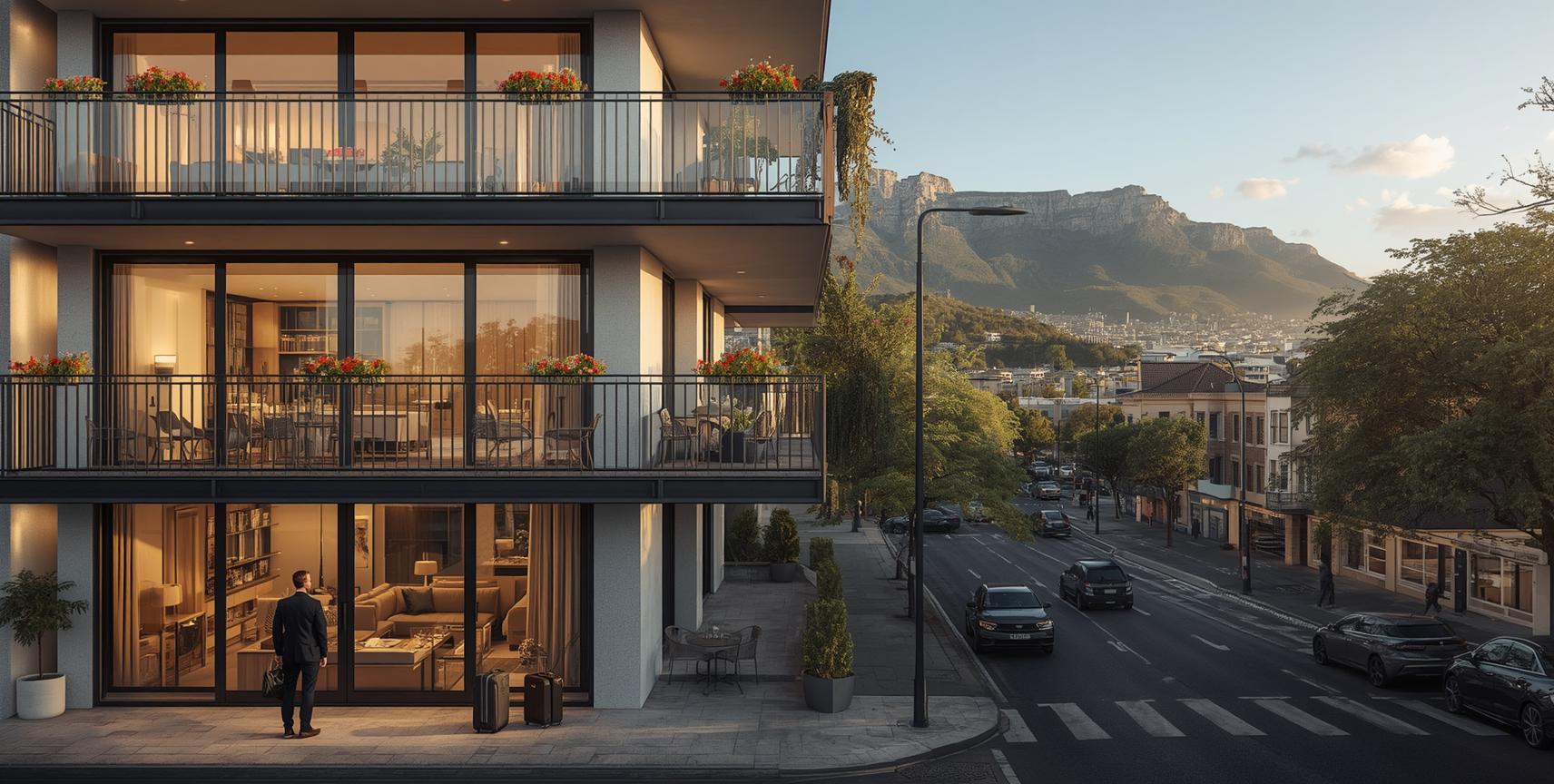
Airbnb in the City Bowl: What the New Regulations Could Mean for Property Owners
The City Bowl has long been one of Cape Town's most popular areas for Airbnb and short-term rentals. But with new municipal measures changing the way short-term letting properties may be treated, owners and investors need to understand what could lie ahead.
The City Bowl has become one of Cape Town's most sought-after areas for short-term accommodation. Its combination of Table Mountain, restaurants, cafés, nightlife, cultural attractions and proximity to the CBD makes it particularly attractive to visitors looking for a central Cape Town experience.
For property owners, this has made apartments and homes in areas such as Gardens, Tamboerskloof, Oranjezicht, Higgovale, Vredehoek and the surrounding City Bowl neighbourhoods popular choices for short-term letting.
However, the rules surrounding short-term rentals are changing.
The City of Cape Town's 2026/27 Rates Policy introduces a framework under which properties used extensively for short-term letting can potentially be treated as Business and Commercial properties for municipal rates purposes. The policy uses a 50% threshold based on the property's short-term-letting availability over a 365-day period.
What does this mean for City Bowl owners?
For an owner who occasionally rents out a home while travelling, the impact may be very different from that experienced by an investor operating a dedicated Airbnb property throughout most of the year.
Properties that are primarily used for commercial short-term accommodation could face a different municipal rates classification, potentially increasing the cost of operating the property. The City's policy sets the Business and Commercial rates ratio at 2.35 times the residential rate, making the financial implications something investors should carefully consider.
This is particularly relevant in the City Bowl, where many investment apartments are purchased specifically because of their potential for short-term rental income.
The investment calculation may need to change
For years, investors have often compared a property's purchase price with its potential Airbnb income. Going forward, the calculation needs to be broader.
Owners should consider:
- Municipal property rates
- Body corporate rules and levies
- Cleaning and management costs
- Insurance
- Maintenance and furnishing
- Tax implications
- Occupancy levels
- Potential changes to short-term letting requirements
- Long-term rental income as an alternative
A property can still be an excellent investment, but the strongest investment decisions will be based on net returns rather than headline Airbnb income.
Could this create opportunities for buyers?
Potentially.
If some owners decide that increased costs or additional compliance requirements make short-term letting less attractive, properties currently operated as Airbnb accommodation could potentially move onto the long-term rental or traditional sales market.
That could create interesting opportunities for buyers looking for City Bowl investment properties.
At the same time, the City's continued focus on regulating short-term letting reflects the importance of finding a balance between tourism, property investment, neighbourhood character and residential housing.
What should City Bowl investors do now?
The key is not to panic—but to plan.
If you already own a short-term rental property, review your numbers and understand how different rental strategies could affect your return.
If you're considering buying a City Bowl property specifically for Airbnb, don't base your decision solely on previous rental performance. Look at the property's complete investment profile and consider both short-term and long-term rental scenarios.
And if you're selling an Airbnb property, understanding how the changing regulations may affect its future income potential will become increasingly important when positioning the property for buyers.
The City Bowl remains one of Cape Town's most desirable property markets. Its central location, lifestyle appeal and strong visitor demand continue to support property interest. But as regulations evolve, informed investors will have an advantage.
The best investment isn't necessarily the property generating the highest Airbnb revenue today. It's the property that continues to make financial sense as the market changes.