
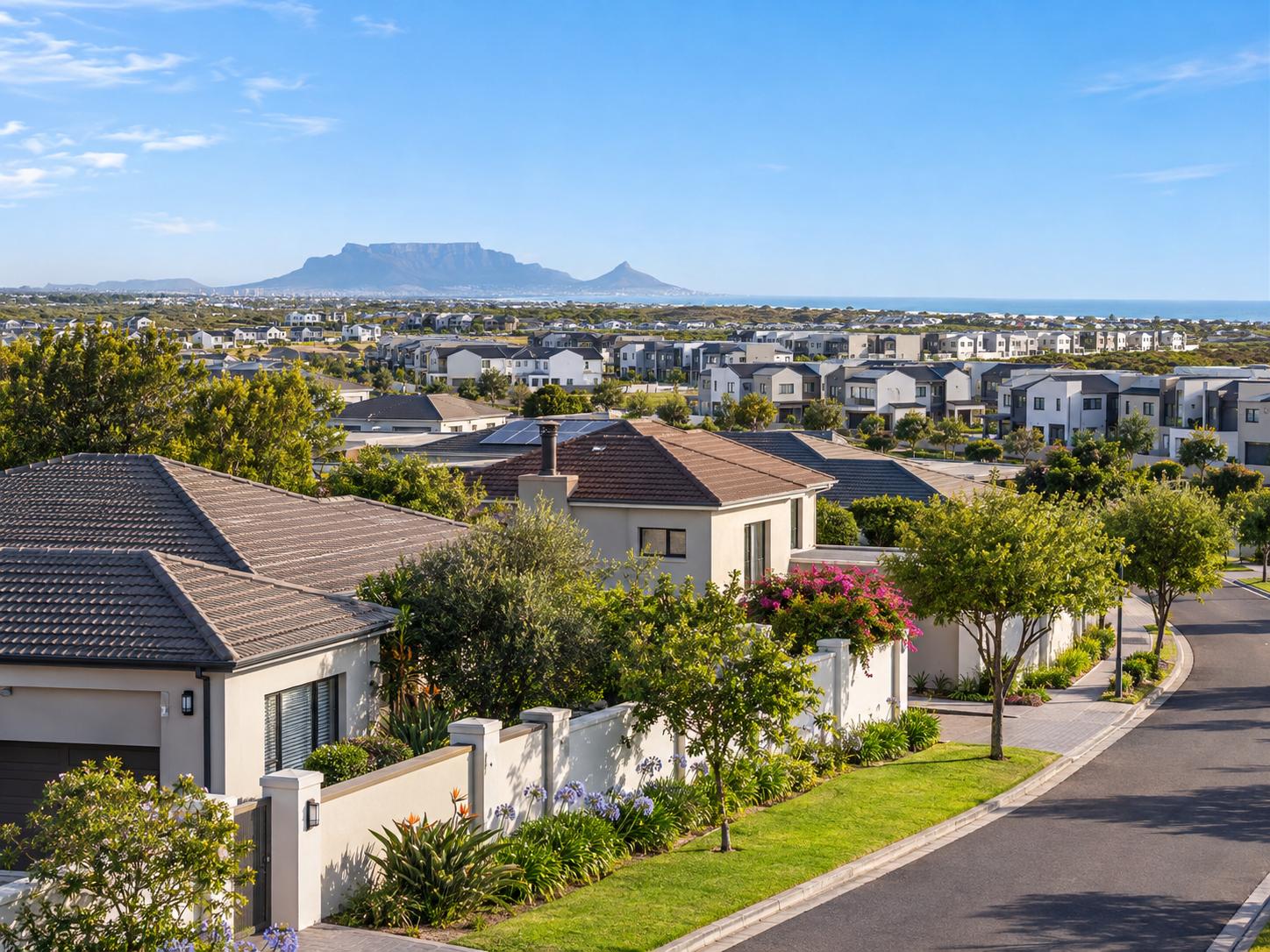
Cape Town Is Building More Homes—So Why Does Property Still Feel So Scarce?
Cape Town’s formal housing stock expanded by approximately 27% between 2010/11 and 2024/25, according to the City’s latest spatial trends research. Yet, across much of the Western Seaboard, buyers still face limited choice in the suburbs, price brackets and property types they want most.
The explanation lies in where—and what—the city is building.
Newer areas such as Parklands North and Sandown have accommodated significant residential development, offering modern homes, secure estates and sectional-title options. However, continued population growth and strong demand have absorbed much of this additional supply.
In established suburbs such as Table View, Sunningdale and Bloubergstrand, the supply challenge is different. Vacant land is increasingly scarce, which means new housing must often come through subdivision, redevelopment or higher-density projects. These take time and do not necessarily produce the family homes buyers are actively seeking.
Although Cape Town’s formal housing stock grew substantially over the period measured, annual property transfers increased by only around 3%. In simple terms, more homes exist—but relatively few are coming onto the market and changing hands.
What does this mean for buyers?
More development does not automatically translate into lower prices or unlimited choice. Buyers should be financially prepared, have bond pre-approval in place and be ready to act when a well-positioned property enters the market.
They should also compare more than the asking price. Levies, municipal costs, energy efficiency, security and future resale appeal can materially affect a property’s overall value.
What does this mean for sellers?
Metro-wide construction figures can disguise genuine shortages within individual suburbs and price bands. Owners of well-maintained, correctly priced homes may be in a stronger position than they realise—particularly where there is little comparable stock available.
That does not mean every property should carry an ambitious asking price. Buyers remain informed and value-conscious, and homes that are overpriced can still lose momentum. A suburb-specific valuation is essential.
Has limited stock changed the value of your Western Seaboard property?
Contact Century 21 Western Seaboard for a complimentary, no-obligation market assessment based on current buyer demand and recent activity in your suburb.
Let’s find out what your property could be worth in today’s market.